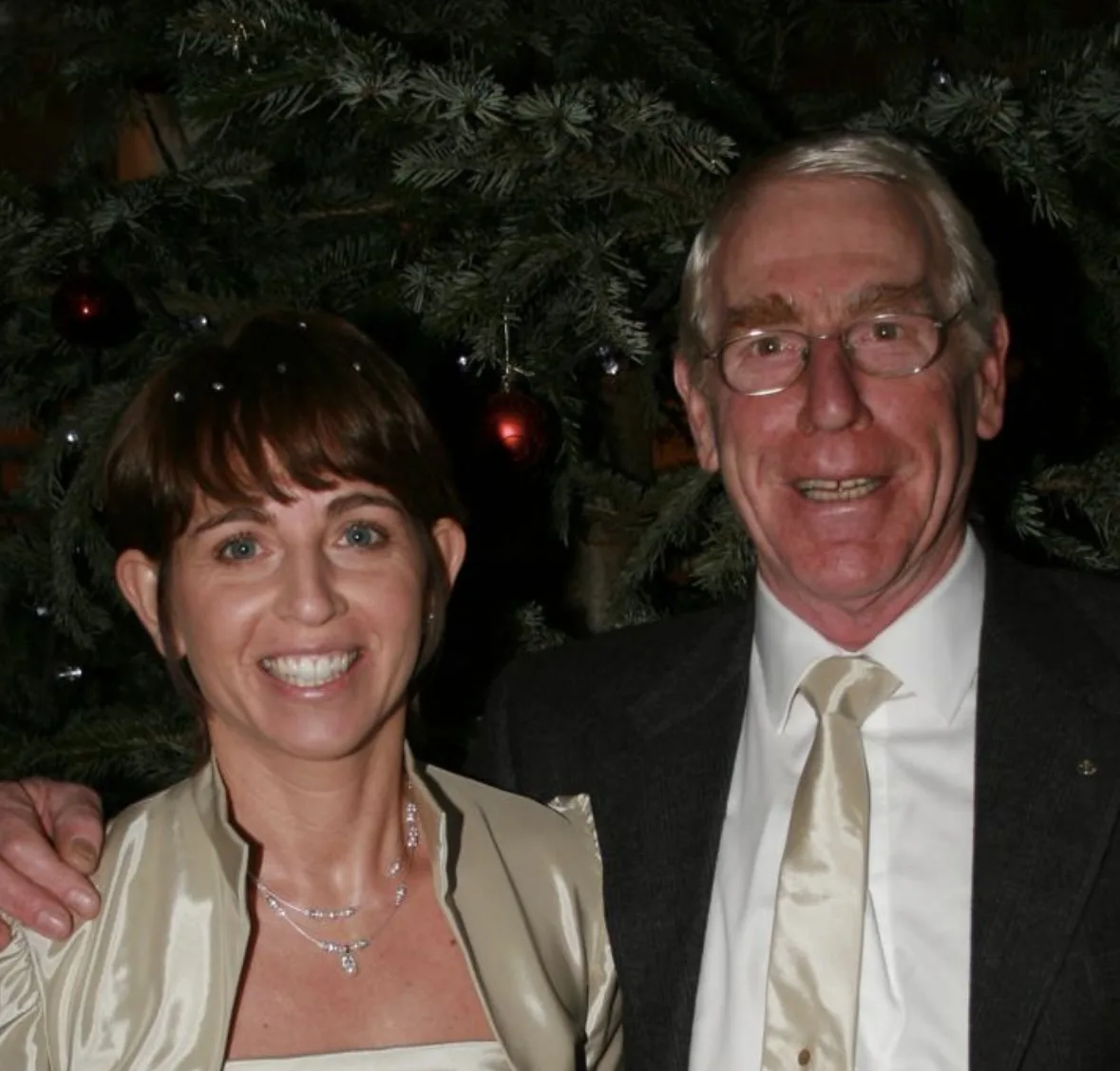

Catherine Cope raised over £4,000 for a free aphasia café at Willoughby Village Hall, near Rugby, starting on 5 November. Checked November 2026.
A free café for people with aphasia and their families opens on Thursday 5 November at Willoughby Village Hall, about five miles south of Rugby. It exists because Catherine Cope watched her father lose his speech and raised more than £4,000 to spare other families what hers went through.
Her father, James Buckby, known as Jim, had primary progressive aphasia. The rare, degenerative condition gradually took away his ability to use and understand language. He died in 2016, aged 75, having lived with it for at least eight years. Catherine says the family had no support in all that time.
“I wanted to help someone, anyone who might be in a similar position to my Dad, and know we were doing something to ease the pain and stress of living with aphasia,” she said.
“Easily able to stand in front of an audience”
Catherine describes her father as a “fabulous” grandfather. He was a Cub Scout leader and a Rotarian who raised money for good causes around the country.
“My dad was always a very personable, friendly, calm, and generous man, easily able to stand in front of an audience and clearly communicate his feelings or thoughts and make people laugh,” she said.
She first acknowledged he was unwell at her wedding in 2008. She had fond memories of his speech at her first wedding, 18 years earlier. This time there were no speeches. He was already showing signs of the disorder, and she believes he would have felt very uncomfortable and anxious.
“It started with Dad not being able to think of the phrase he needed, tripping up over his words, taking a while longer to register what was being said and respond in an appropriate way,” she said.
“Dad became increasingly frustrated and anxious. It was so unlike him, normally very level-headed and always the voice of reason in any difficult situation.
“In all this time, I absolutely believe that for the most part he knew exactly what he wanted to say but couldn’t communicate it.”
For a time, father and daughter used pen and paper to draw what he wanted to say. “He loved playing crib and for a long time during his illness he was still able to play,” she said. “For me, it was a special and lovely time to spend with him.”
Physically he stayed well, but he could no longer fully join in with the people and moments that mattered most. “It was difficult to watch for everyone, including his wife, Janet, my brother Michael, and other family members and friends who were amazing, patient and understanding,” she said.
“The family felt very much alone”
Catherine says it took many medical appointments to get a diagnosis, and that no advice came with it.
“Following diagnosis, there was no valuable advice offered or given for his condition and the family felt very much alone,” she said. “We were unable to access any help groups or resource libraries to ease my Dad’s uncomfortable and increasingly anxious state.”
When she retired in 2025, she set out to improve what she calls “inadequate” care and support for people with aphasia in her area. She contacted Aphasia Support, a charity founded in 2011 that was looking to expand beyond Yorkshire. With support from her husband Kevin, she then raised the money for a Rugby group.
“The café will be inclusive, offering people with aphasia and their loved ones a safe space, a community,” she said. “A place where we will offer a friendly face, professional support, good company, patience and understanding.”
She plans to volunteer there herself. “I could not be more excited for Aphasia Support,” she said. “I look forward to volunteering my time and helping other families affected by aphasia living in Warwickshire and surrounding areas.”
What aphasia is
Aphasia is a communication disorder caused by damage to the language parts of the brain. It can affect speaking, understanding, reading and writing, but it does not affect intelligence. The charity’s figures give a sense of how common it is:
- more than 430 people in the Rugby area are believed to be living with it
- an estimated 350,000 people in the UK live with a diagnosis
- a third of people who have a stroke will develop some form of it
It can also follow a brain injury or brain tumour, or come with a form of dementia. The charity says speech and language therapy is known to be the best treatment.
What it means for you
The café is for people with aphasia and their carers or loved ones. It is led by speech and language therapist Ellis Becks, and the charity’s Rugby page gives the details:
- When: the first and third Thursday of every month, 10.30am to 12 noon, starting on 5 November
- Next dates: 19 November, 3 December and 17 December
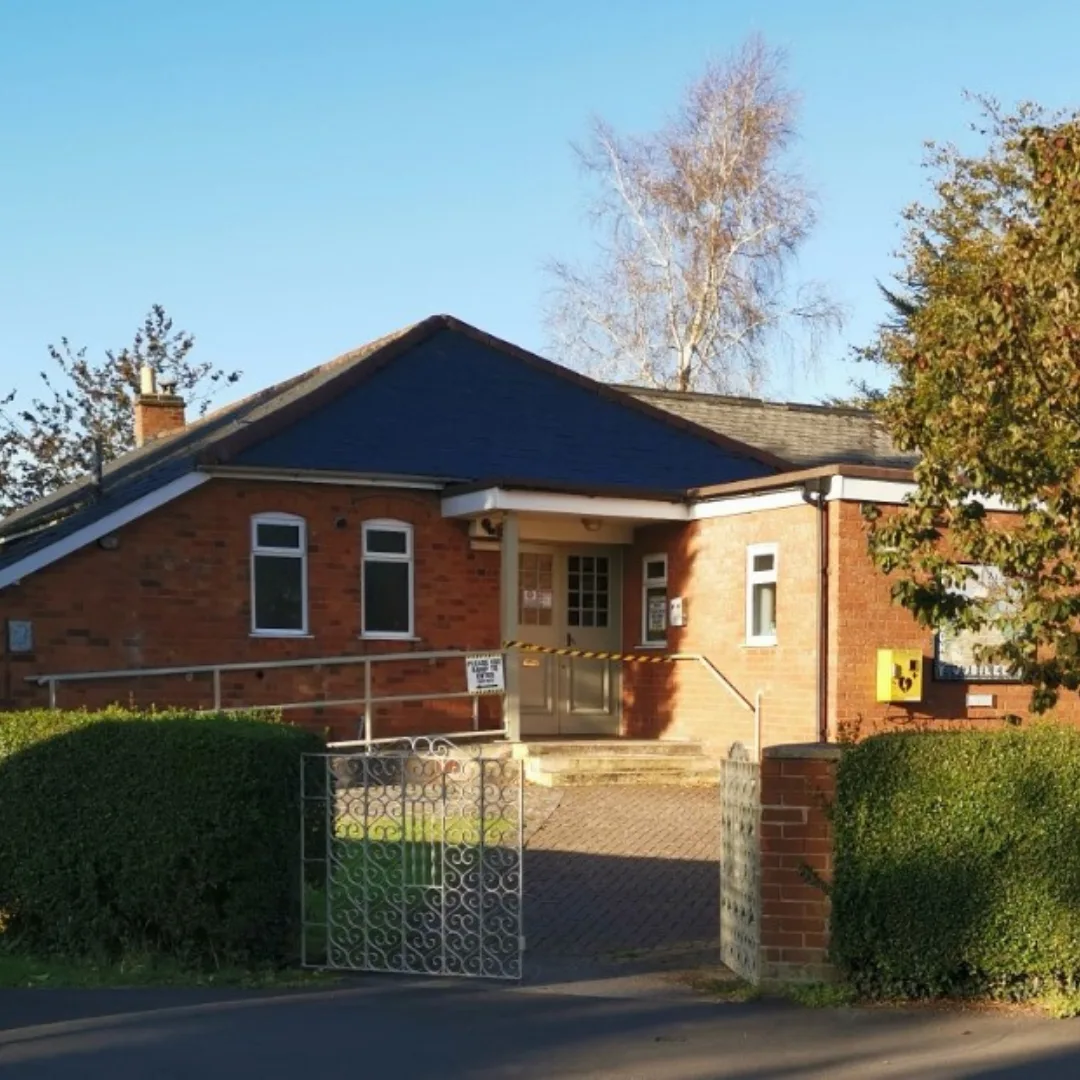
- Where: Willoughby Village Hall, Main Street, Willoughby, CV23 8BH
- Cost: free
- Access: wheelchair accessible, with parking that includes disabled bays near the entrance, and accessible toilets
You need a referral before your first session, and referrals are open to anyone. The charity welcomes them from healthcare providers, speech and language therapists, charities and organisations such as the Stroke Association, and from people living with aphasia, their carers or loved ones, who can refer themselves. It is done online through the charity’s referral form, and a member of the team then gets in touch. That can include a home visit from the session leader. Anyone unsure how to be referred can ring the charity on 0300 102 3500 or email info@aphasiasupport.org.
The charity says a typical session starts with a catch-up over tea, coffee and biscuits. A group discussion often follows, perhaps on an aphasia-friendly round-up of the news, and sessions like to end with something fun such as a quiz. Carers can stay, or use the time for a short break. A carer must stay if the person they support cannot use the toilet unaided.
Jo’s words, from the charity’s case study, give a sense of what the groups can do. “It’s such a fantastic help. It’s the best thing. Friendships, love and support, that is how it is,” she said. “When I first came, I couldn’t say anything. This help has helped us, getting better and better and better.”
Have your say